
Duct Sealing Cost in Cincinnati, OH: What You’ll Actually Pay and Why It Depends on What We Find First
Duct sealing in Cincinnati typically runs $450–$1,800 for most homes, with simple basement trunk-line repairs at the lower end and full-system sealing of aged, unlined galvanized ductwork in older neighborhoods climbing toward the higher range. The exact figure depends on whether we’re sealing accessible basement runs or chasing leaks through plaster wall cavities in a 1920s Price Hill two-family. Call (855) 916-8161 and William Davis will assess your system in person — estimates are free, and we’ll show you exactly what’s leaking before we quote any sealing work.
Here’s what most duct sealing cost guides won’t tell you: in Cincinnati’s housing stock, sealing before cleaning is a mistake that can trap mold inside your system. We’ve learned that the hard way over 14 years and thousands of jobs.
Why Cincinnati’s Older Homes Change the Duct Sealing Equation
Cincinnati carries one of the oldest urban housing stocks in the Midwest. Walk through Price Hill, Westwood, Clifton, or my old neighborhood of Norwood and you’ll find pre-WWII Italianate and Queen Anne homes that started life with gravity warm-air “octopus” furnaces. Those systems were later converted to forced-air, leaving massive, unlined sheet-metal trunk lines sitting in damp basements just blocks from the Ohio River.
The Ohio River Valley acts like a natural humidity trap. Warm, moist air pools in the basin all summer, driving moisture levels inside duct systems that newer cities simply don’t contend with. That valley humidity doesn’t just make your basement feel clammy — it changes what duct sealing actually requires to last.
We’ve opened up basement trunk lines in Columbia-Tusculum hillside homes where the supply ducts looked fine from the register, but the slab-level runs were packed with mold. Those walk-out basements see sharp seasonal temperature swings, and the cold metal surface becomes a condensation magnet for humid river-valley air. Sealing over that contamination with mastic traps the problem inside. It’ll hold for a season, maybe two, then the mold finds new pathways and you’re back to square one — with a lighter wallet and no better air quality.
That’s why our approach starts with inspection during cleaning. William Davis assesses seam condition and contamination firsthand, so you get a single-visit diagnosis rather than separate quotes from separate companies who aren’t talking to each other.
What Duct Sealing Actually Costs: Cincinnati Price Breakdown
Generic national pricing doesn’t account for what we regularly encounter in Cincinnati basements, which is why our best duct repair and sealing approach starts with local expertise. The table below reflects real ranges we’ve quoted over 14 years, split by the type of work and access involved:
| Service Scope | Typical Cost Range | What Drives the Price |
|---|---|---|
| Basement trunk-line sealing (accessible, visible runs) | $450–$750 | Linear footage of seam, condition of existing mastic, surface prep needed |
| Full system sealing with basement + main branches | $900–$1,400 | Additional branch line access, more linear footage, possible register boot sealing |
| Wall-cavity branch sealing or repair | $1,200–$1,800+ | Plaster wall access, limited workspace, possible section replacement vs. surface sealant |
| Pre-sealing duct cleaning (required for proper adhesion) | $350–$600 | System size, contamination level, accessibility; bundled with sealing reduces total |
The wall-cavity work is where Cincinnati’s retrofit ductwork gets expensive. Those 1890s–1950s homes weren’t built for forced-air. Ducts snake through irregular plaster cavities and cramped crawlspaces, often with failing mastic at joints we can’t reach without cutting access. Sometimes we can seal from the basement side; sometimes the geometry simply doesn’t allow it, and we need to discuss section replacement rather than sealing.
We don’t quote wall-cavity work blind. William Davis will tell you straight if a section’s worth sealing or if you’re throwing money at a geometry problem that needs a different solution.
The Clean-Then-Seal Sequence: Why We Won’t Skip It
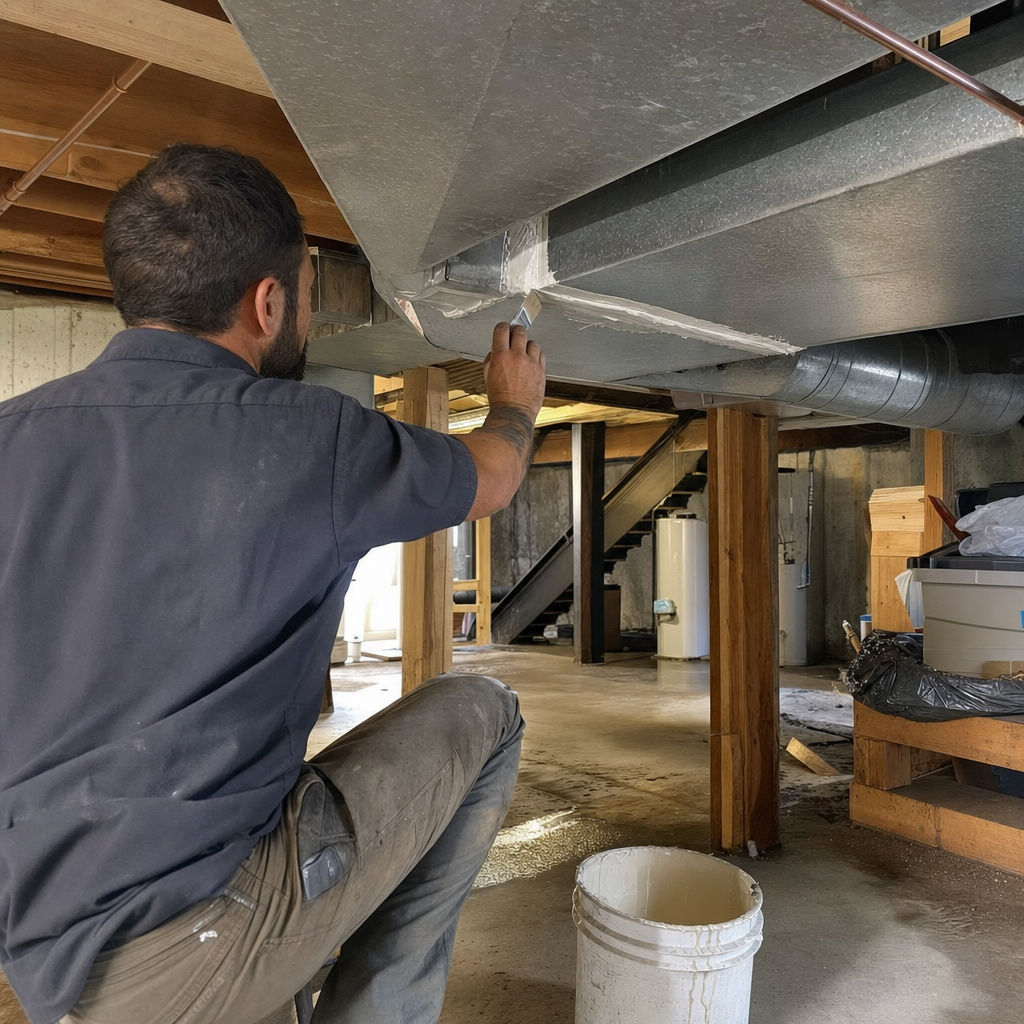
Mastic and metal-foil tape — the professional sealants we use — require a clean, dry surface to bond correctly. Galvanized metal in a Cincinnati valley-humidity basement is neither, not until it’s been professionally cleaned and dried.
Here’s the technical reality: mastic is an adhesive compound. Apply it over dust-compacted galvanized steel with active mold colonization, and you’re sealing in moisture and organic material. The bond fails prematurely as the substrate continues to degrade underneath. We’ve been called back to jobs where another company sealed first, and the mastic was peeling like old paint within 18 months — because the surface underneath was never properly prepared.
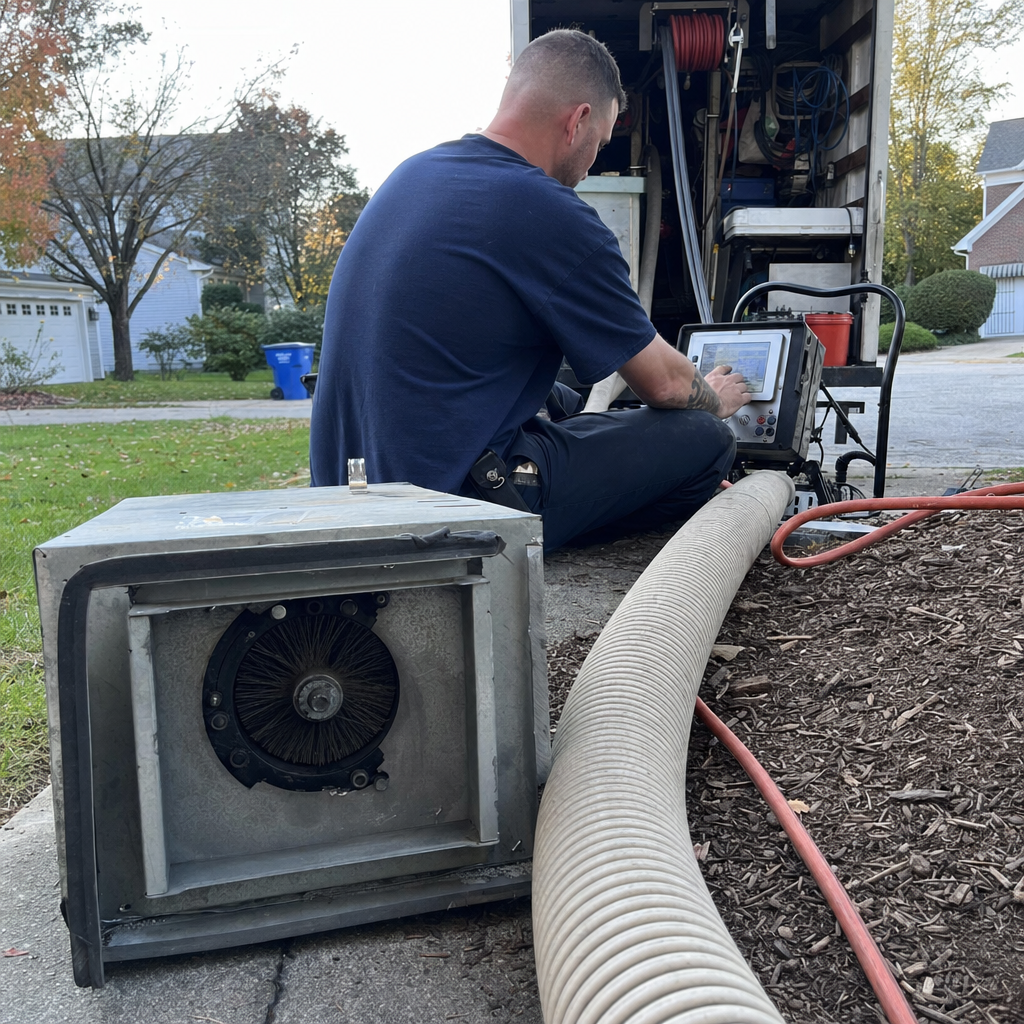
Our Rotobrush and Nikro systems clean the full duct run first, including the trunk lines where Cincinnati’s humidity does its worst damage. Then we dry the system thoroughly. Only then do we apply sealant. The difference in bond longevity is measurable — we’ve got 10-year-old sealing jobs in Norwood and Anderson Township still holding tight because the prep was done right.
Clean ducts aren’t glamorous — but neither is replacing a blower motor because it was choking on years of buildup. The same principle applies to sealing: the prep work determines whether the repair lasts.
Why Duct Sealing ROI Is Higher in Cincinnati Than Most Cities
This is where the Ohio River Valley geography becomes a financial argument, not just a weather complaint.
When conditioned air leaks from your supply ducts into an unconditioned Cincinnati basement, the replacement air doesn’t just cost you in lost BTUs. Because of the valley’s elevated summer humidity, that replacement air carries more moisture than it would in a flatter, drier city like Columbus or Dayton. Your AC works harder to cool it, then works harder again to dehumidify it. The compounding effect means a 15–20% duct leakage rate in Cincinnati produces a higher utility penalty than the same leakage rate in a drier climate.
We’ve had customers in Mount Lookout and Hyde Park see summer electric bills drop 12–18% after proper sealing — not because we did anything magical, but because we stopped their system from fighting a humidity battle it was never designed to win. In winter, the same leaks pull cold, damp basement air into the return, forcing longer furnace cycles.
The payback math depends on your system’s efficiency and your home’s leakage profile, but in Cincinnati’s climate, sealing tends to justify itself faster than generic online calculators suggest.
How to Evaluate a Duct Sealing Quote in Cincinnati
Not every company that offers “duct sealing” delivers the same thing. Here’s what separates a proper job from a quick tape-and-go:
- Surface inspection before quoting: Any quote given without looking inside your ducts is a guess. We use camera inspection during our cleaning assessment to map seam condition and contamination before we price sealing work.
- Prep work specified: If the quote doesn’t mention cleaning and drying before sealing, the bond will fail prematurely in Cincinnati’s humidity. Ask directly.
- Access strategy explained: For wall-cavity branches, how will they reach the leaks? If the answer is vague, the actual scope probably is too.
- Material specified: We use professional-grade mastic and metal-foil tape rated for duct applications, not hardware-store duct tape that degrades in temperature cycles.
- Post-seal verification: A proper job includes pressure testing or smoke testing to confirm leakage reduction. We don’t consider a sealing job complete until we’ve verified the improvement.
The low bids that circulate on coupon sites rarely include proper prep or verification. We’ve cleaned up after enough of them to recognize the pattern: sealant applied over dirty metal, no inspection, no testing, and a callback 12–18 months later when the homeowner realizes the problem never actually got fixed.
Our Approach: One Visit, Complete Diagnosis
When you call (855) 916-8161, William Davis handles the inspection personally — not a subcontractor rotating through three companies this week. With 14 years in the trade and training from Cincinnati State Technical and Community College’s HVAC/R program, he’s the one who walks your system, identifies the leak points, and explains whether sealing, cleaning, or a combination makes sense for your specific setup.
We bring professional-grade Rotobrush and Nikro equipment to every job, along with air quality technology from Honeywell when indoor air concerns extend beyond sealing. The full scope matters: Duct Repair & Sealing is one of five services we offer, from cleaning to sanitizing, so we’re not pushing sealing as the answer to every problem. Sometimes a section needs replacement. Sometimes the real issue is a failed register boot that cleaning and sealing won’t address. We’ll tell you which is which.
Over 1,000 verified reviews — 1,049 at last count, averaging 4.8 stars — reflect the consistency of that approach. Customers know they’re getting the owner on-site, not a rotating crew, and that the quote won’t mysteriously expand once work begins.
FAQs
Most Cincinnati homeowners pay between $450 and $1,400 for duct sealing, with simple basement trunk work at the lower end and full-system or wall-cavity sealing in older homes toward the higher end — see our 2026 duct repair and sealing cost guide for detailed pricing factors. The exact price depends on duct accessibility, contamination level, and whether proper cleaning prep is included. Call (855) 916-8161 for a free estimate — we’ll inspect your system first and quote only what’s actually needed.
Sealing is cheaper when leaks are at accessible seams in otherwise sound ductwork; replacement becomes more cost-effective when galvanized sections are corroded, heavily contaminated, or located in wall cavities where sealing can’t achieve a proper bond. In Cincinnati’s pre-WWII housing stock, we often find basement trunks worth sealing but upper-branch sections that have deteriorated too far — we’ll show you the difference during inspection rather than defaulting to either option.
We can complete sealing the same day as cleaning for most basement-accessible systems, but wall-cavity work or extensive trunk repair may require scheduling a return visit with proper drying time built in. Same-day service is more feasible when we’re already on-site for a cleaning and the sealing scope is limited to visible, accessible runs. Call (855) 916-8161 to discuss your timeline — we’ll be straight about what’s realistic for your specific home.
Yes — in Cincinnati’s humid climate, properly sealed ducts typically reduce heating and cooling costs by 12–20% because you’re no longer losing conditioned air while pulling in damp basement or crawlspace air. The Ohio River Valley’s humidity makes the savings more pronounced here than in drier Midwest markets, since your system works double-duty to dehumidify replacement air. We verify results with pre- and post-sealing pressure testing so you can see the improvement, not just take our word for it.
Ready to Stop Paying for Air That Never Reaches Your Rooms?
Leaky ducts in a Cincinnati basement aren’t just wasting money — they’re pulling humid, potentially mold-laden air into the system your family breathes every day. William Davis will walk your ductwork with you, show you exactly what’s leaking and why, and quote sealing work only if it’s the right fix for your specific system. No upsell pressure, no mystery charges.
Call (855) 916-8161 today for a free estimate. We’ll inspect, diagnose, and if sealing makes sense, we’ll do it right — clean surface, proper prep, verified results. That’s how you get a repair that lasts in Cincinnati’s demanding climate.
Written by William Davis, Owner & Lead Technician at Vanguard Air Duct & Vent Cleaning Greater Cincinnati, serving Cincinnati, OH.