
Is Air Duct Cleaning Worth It in Cincinnati? Usually Yes—Here’s When It Actually Matters
For most Cincinnati homes—especially the older housing stock common in neighborhoods like Price Hill, Clifton, and Norwood—professional Air Duct Cleaning services are worth the investment when you can see debris at registers, smell mustiness from vents, or know your system has never been professionally cleaned. The EPA’s skepticism about routine duct cleaning assumes relatively clean, modern systems in dry conditions; that assumption rarely holds for the 1930s-era galvanized trunk lines sitting in humid Ohio River Valley basements all summer. If you’re noticing dust recirculation, allergy flare-ups, or uneven airflow, call Vanguard Air Duct & Vent Cleaning Greater Cincinnati at (855) 916-8161 for a camera inspection that shows you exactly what’s inside before you spend a dollar.
Why the “Worth It” Question Hits Different in Cincinnati
The national debate about air duct cleaning tends to flatten into two camps: the EPA cautioning that routine cleaning hasn’t proven to prevent health problems, and industry voices pushing annual service. Both miss the Cincinnati-specific reality.
William Davis, Owner & Lead Technician at Vanguard Air Duct & Vent Cleaning Greater Cincinnati, has spent 14 years cleaning duct systems across the city, from the hillside cut homes in Columbia-Tusculum to the brick two-families in Westwood. He’s walked enough basements to know that Cincinnati’s housing stock and climate create conditions where the generic national advice simply doesn’t apply.
Here’s what makes this market different:
- Retrofitted gravity systems: A disproportionate share of Cincinnati’s pre-WWII housing—Italianates, Queen Annes, and brick duplexes in neighborhoods like Norwood and Price Hill—started with gravity warm-air “octopus” furnaces later converted to forced air. Those conversions left massive, unlined galvanized trunk lines that were never designed for the airflow pressures of modern systems.
- Humidity trap geography: Cincinnati sits in the Ohio River Valley basin, where warm, moist air pools all summer. Unconditioned basements and crawlspaces stay damp, and that moisture loads into duct systems in ways that don’t happen in flatter, drier Ohio cities like Columbus or Dayton.
- Never-cleaned legacy ductwork: Many of these systems have run for 30, 50, or even 70 years without professional cleaning. The buildup isn’t theoretical—it’s compacted dust, skin cells, pet dander, and in damp sections, active mold colonization.
In Mount Lookout and parts of Anderson Township, Davis regularly finds supply trunks in walk-out basements packed with mold even when upstairs registers look clean. The slab-level runs act as cold surfaces for humid valley air all summer, creating condensation points that don’t exist in above-grade duct systems.
Clean ducts aren’t glamorous — but neither is replacing a blower motor because it was choking on years of buildup.
When Duct Cleaning Is Genuinely Worth It—and When It’s Probably Not
We don’t upsell customers who don’t need the service. For newer homes in suburbs like Mason or West Chester, with well-sealed flex duct systems in conditioned spaces and no moisture history, the evidence that routine cleaning improves air quality is genuinely thin. We’d rather tell you that honestly than take your money for marginal benefit.
But in our experience across Cincinnati, the conditions where cleaning demonstrably matters come up more often than national averages suggest:
| Condition | Why It Matters | Cincinnati Prevalence |
|---|---|---|
| Visible debris at supply registers | Significant accumulation has already occurred; blower is recirculating particulate | Common in homes with 20+ year old systems, especially with pets |
| Measurable musty odor from vents | Indicates mold or mildew colonization, not just dust | Elevated in river-valley humidity; frequent in unconditioned basements |
| Known water event or long-term moisture exposure | Creates conditions for mold growth that standard HVAC operation won’t resolve | High in older homes with basement duct runs, foundation seepage |
| Post-renovation debris | Construction particulate (drywall dust, sawdust, insulation) lodges in ductwork | Relevant throughout Cincinnati’s active renovation neighborhoods |
| Older unlined galvanized systems in unconditioned spaces | Rough interior surfaces trap debris; seams leak conditioned air and draw in contaminants | Very high in pre-1960 housing stock across city core neighborhoods |
The honest calculation: if your Cincinnati home hits two or more of these conditions, professional cleaning moves from “maybe” to “worth doing properly.” Many of the homes we service in Clifton, Northside, and Walnut Hills hit three or four simultaneously.
What “Worth It” Actually Means: The Inspection Before the Work
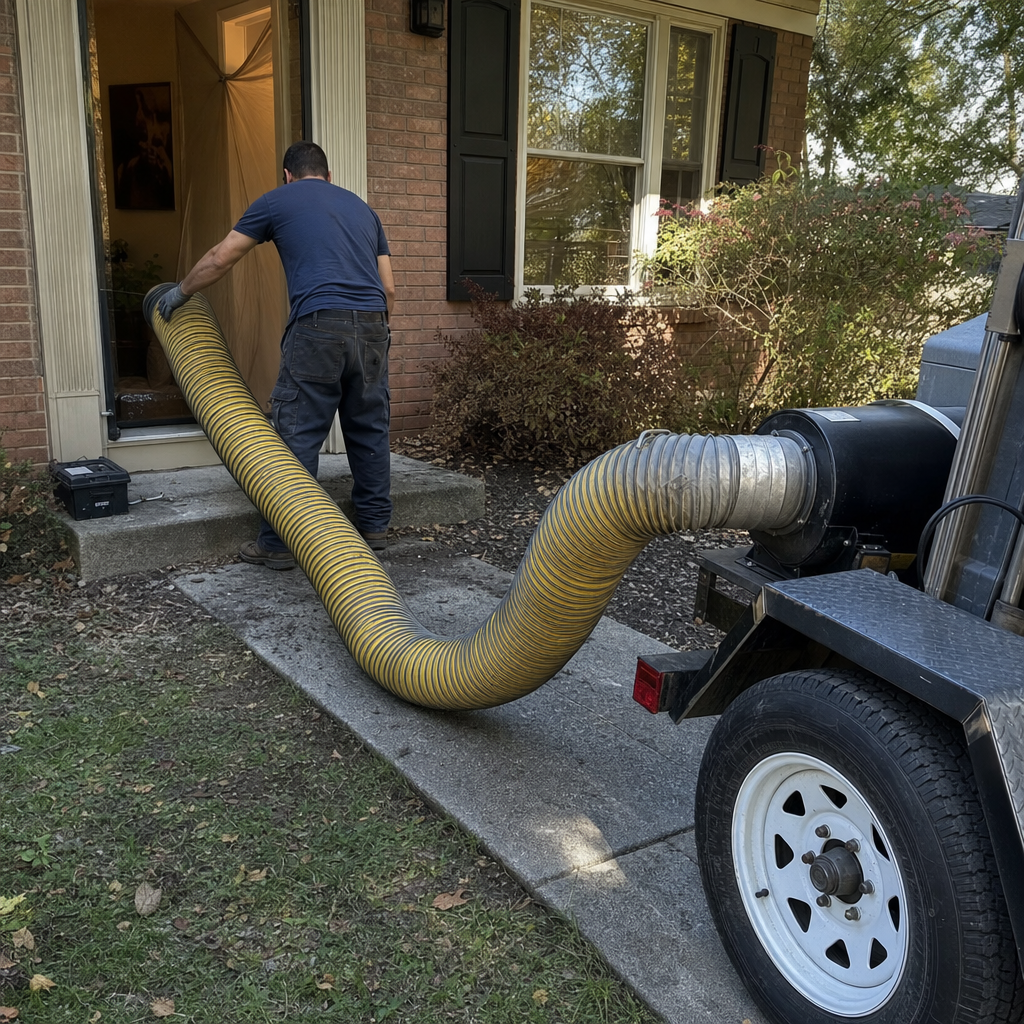
The biggest problem in this industry is that customers can’t see what they’re paying for. A truck-mounted vacuum and a few brushed registers might make noise for three hours without materially changing what’s inside your system.
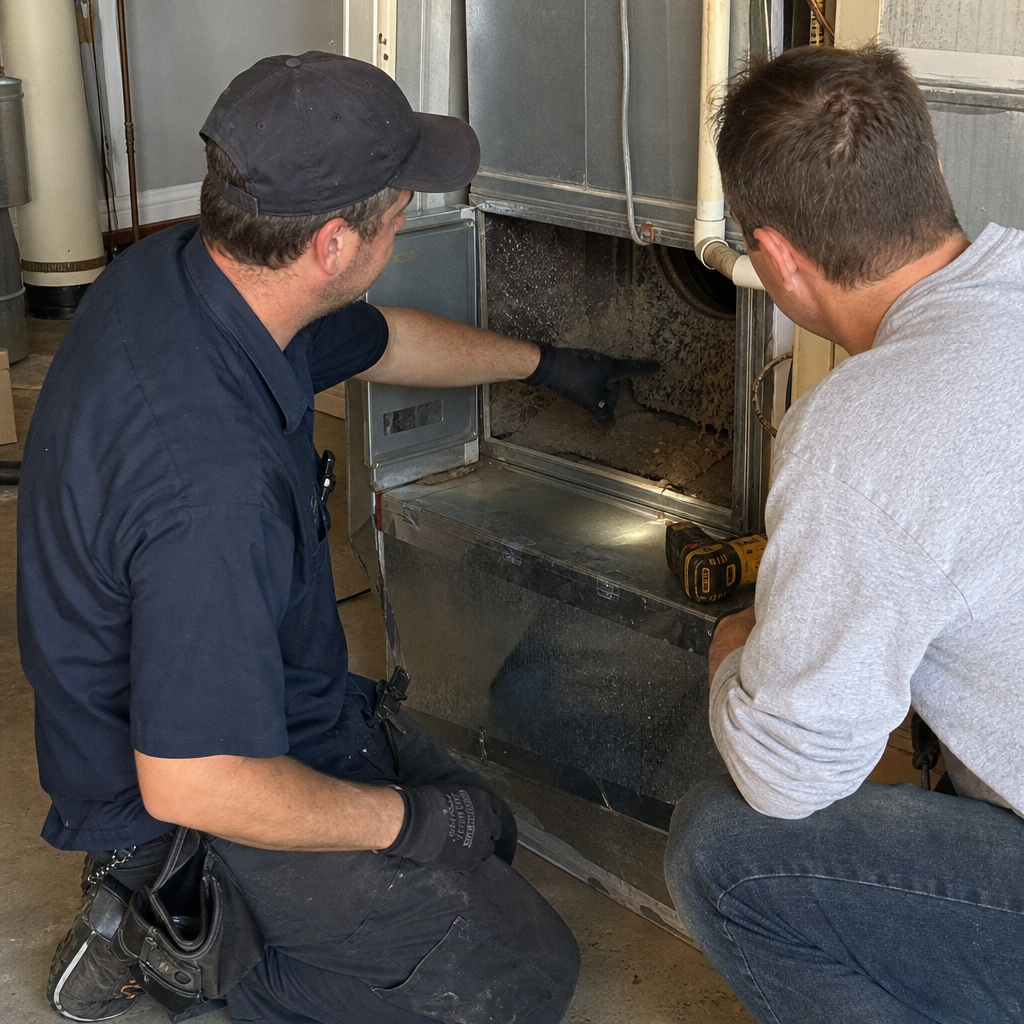
That’s why we built our process around visual evidence, not trust-me claims. Our Rotobrush system includes camera inspection capability—Davis runs the camera through trunk lines and branch ducts before any cleaning begins, then again after completion. Customers see the buildup, the seams, the moisture staining, the rodent debris. They also see the after.
This changes the “worth it” question entirely. Instead of wondering whether the service helped, you’re looking at documentation. In a 1920s Westwood duplex last spring, the camera revealed a galvanized trunk line packed to roughly 40% blockage with compacted dust and a section of actively growing mold where a basement window leak had gone unnoticed. The homeowner’s “maybe worth it” became an obvious “yes”—and the before/after footage was the proof.
Our professional-grade equipment matters here. Rotobrush and Nikro systems are the standard serious operators use, not the consumer-grade tools available at big-box retailers. The brush-and-vacuum combination loosens adhered debris from rough galvanized surfaces and extracts it under controlled negative pressure, rather than simply agitating dust into your living space. For homes with confirmed mold or significant contamination, we can follow cleaning with Air Quality & Sanitizing using Abatement Technologies protocols—actual remediation, not scented masking.
The Cost Question: What Duct Cleaning Runs in Cincinnati
How Much Does Air Duct Cleaning Cost? (2026 Price Guide) — Cincinnati, OH depends on system size, accessibility, and condition. Cincinnati homeowners typically see these ranges:
| Service Component | Typical Range |
|---|---|
| Standard residential air duct cleaning (single system, up to 10 vents) | $350–$550 |
| Larger homes or dual-zone systems (15+ vents, multiple returns) | $550–$850 |
| Heavy contamination requiring extended agitation/extraction | Add $150–$300 |
| Duct repair & sealing (seam repair, mastic reapplication, minor patching) | $200–$600 depending on scope |
| Air quality sanitizing post-cleaning (mold/bacteria treatment) | $150–$250 |
These aren’t bargain rates, and we don’t try to be the cheapest bid. The fly-by-night services advertising Whole House Air Duct Cleaning Cost in Cincinnati, OH far below market rate typically run a shop vacuum for 45 minutes and leave the trunk lines untouched. We’ve been called in afterward to do the job properly—meaning the customer paid twice.
For a system that’s never been cleaned in a 1940s Norwood bungalow or a 1960s Anderson Township ranch with original ductwork, the relevant comparison isn’t cleaning cost versus doing nothing. It’s cleaning cost versus the accumulated load on your HVAC equipment, the particulate you’re breathing, and the eventual repair or replacement when a blower motor fails from overwork or mold spreads into components that require replacement.
Key Takeaways: Making the Decision for Your Cincinnati Home
- Age and moisture history matter more than calendar scheduling. A 5-year-old system in a dry, conditioned space doesn’t need what a 50-year-old system in a damp basement does.
- Cincinnati’s river-valley humidity and retrofitted housing stock tilt the “worth it” calculation positive more often than national averages.
- Camera inspection removes guesswork. You should see the condition before you authorize work, not after.
- Professional-grade equipment and thorough process matter more than frequency. One proper cleaning with Rotobrush extraction beats three superficial services.
- Complete duct care—cleaning, repair, sealing, sanitizing—resolves the whole problem in one engagement, rather than treating symptoms repeatedly.
FAQs
It can be, but only if your ducts are actually contributing to the problem. In Cincinnati’s older homes with unlined galvanized systems, we’ve measured significant reductions in airborne particulate after proper cleaning—especially when combined with sealing leaky returns that were drawing in basement dust and mold spores. For newer homes with clean, sealed flex duct, the allergy benefit is typically marginal; your money may go further with a better filtration upgrade first. Call (855) 916-8161 and we’ll assess whether your specific system is likely the source.
For most Cincinnati homes with older systems in unconditioned basements, every 5–7 years is a reasonable interval if the initial cleaning reveals significant buildup. Homes with newer, well-sealed systems in dry conditions can go 10 years or longer. The more relevant trigger is condition, not calendar: visible debris, musty odors, post-renovation dust, or known moisture events should prompt inspection regardless of elapsed time. We don’t sell maintenance contracts—call us when something changes.
You can clean register covers and the first few inches of visible duct with a vacuum, but you cannot safely or effectively clean trunk lines, branch ducts, or the plenum without professional equipment. More importantly, you cannot inspect what’s actually inside without a borescope camera—and in Cincinnati’s older homes, the worst contamination is often in basement trunk lines you can’t access without cutting into the system. Attempting DIY agitation without proper negative-pressure extraction risks releasing concentrated mold spores or asbestos-containing material (present in some pre-1980 duct insulation) into your living space. For anything beyond surface cleaning, we recommend a trained professional.
Partial repair and sealing is almost always cheaper than full replacement—typically $200–$600 versus $3,000–$8,000 for complete duct system replacement in a Cincinnati home. However, replacement becomes worth considering when galvanized trunk lines are extensively corroded, original asbestos insulation is degrading, or the retrofit duct layout is so poorly designed that cleaning can’t resolve airflow problems. We assess this honestly during our inspection: if your system is a candidate for repair and sealing, we’ll show you exactly what needs attention. If it’s beyond practical service life, we’ll tell you that too. Call (855) 916-8161 for an evaluation with no pressure either way.
Ready to See What’s Actually in Your Ducts?
The question “is air duct cleaning worth it” can’t be answered in the abstract—it depends on what’s inside your specific system, in your specific house, in Cincinnati’s specific climate. After 14 years and thousands of inspections across the city, we’ve learned that the homeowners who benefit most are often the ones who assumed their ducts were fine until they saw the camera footage.
If you’d rather have it looked at, Vanguard Air Duct & Vent Cleaning Greater Cincinnati offers a no-pressure assessment in Cincinnati—call (855) 916-8161 to schedule a camera inspection, and we’ll show you exactly what you’re dealing with before you decide on any service.
Written by William Davis, Owner & Lead Technician at Vanguard Air Duct & Vent Cleaning Greater Cincinnati, serving Cincinnati, OH.