
Abatement Technologies Air Duct Cleaning in Cincinnati: A Homeowner’s Guide
Abatement Technologies air duct cleaning in Cincinnati uses negative air pressure systems with HEPA filtration to remove debris from your entire duct network, but the equipment only works properly when a trained technician configures the right CFM draw, seals all registers correctly, and allows adequate contact time per vent. In our 14 years cleaning ducts across Cincinnati, we’ve seen plenty of crews roll impressive-looking machines into driveways in neighborhoods like Hyde Park and West Chester, then skip the setup steps that actually make the cleaning effective. If you’d rather not play equipment inspector in your own basement, call us at (855) 916-8161 for a free estimate — William Davis leads every job personally.
What Abatement Technologies Equipment Actually Does
Let’s cut through the manufacturer language. Abatement Technologies builds HEPA-AIRE portable power vacuums — essentially industrial-strength negative air machines that pull 2,000 to 5,000 CFM (cubic feet per minute) depending on the model. The core idea is simple: create suction at your main trunk line so strong that dislodged debris gets carried out of the system entirely, rather than pushed deeper or released into your living space.
The HEPA filtration part matters more than most homeowners realize. Standard shop vacs and many consumer-grade duct cleaners exhaust fine particles back into your home. A true HEPA-AIRE unit captures 99.97% of particles down to 0.3 microns — that’s mold spores, pollen, and the fine dust that settles on your furniture three days after a lesser cleaning.
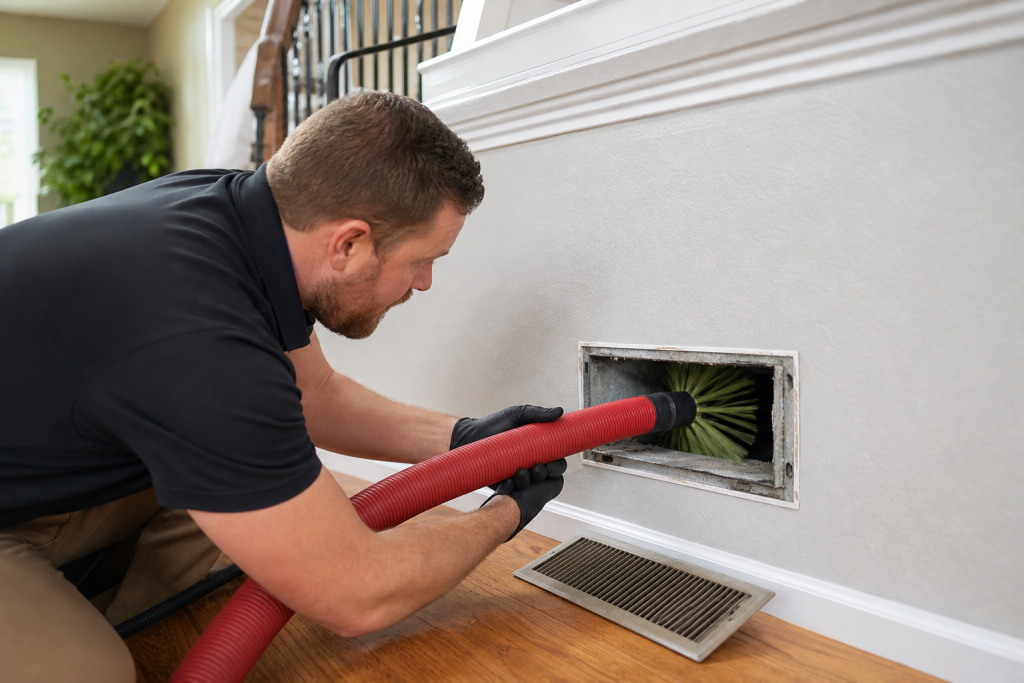
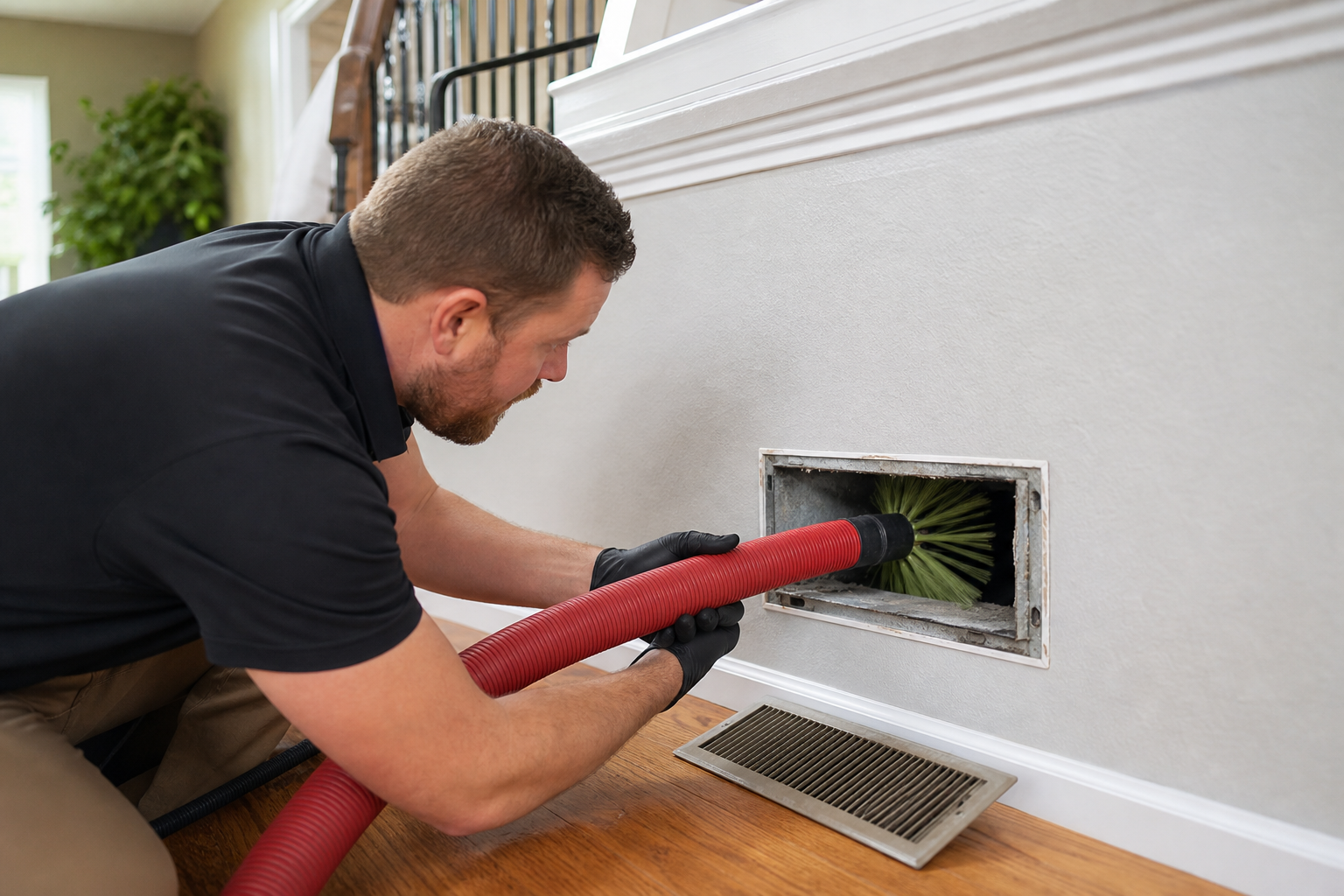
Here’s what the machine doesn’t do: it doesn’t scrub the duct walls by itself. The vacuum creates the draw, but agitation tools — rotary brushes, air whips, skipper balls — must physically contact the duct interior to break debris loose. We’ve inspected Cincinnati homes where a crew ran a big Abatement unit for two hours and left the ducts looking barely touched because they never ran proper agitation. The machine was working. The technique wasn’t.
Key components homeowners should know:
- Negative air machine: The vacuum unit, typically placed outside or in a garage, connected to your trunk line via a large-diameter hose
- HEPA filtration bank: Multi-stage filters preventing exhausted air from recontaminating your space
- Agitation system: Separate from the vacuum — rotary brushes, compressed air tools, or robotic crawlers for hard duct types
- Register sealing: Temporary blockers on every vent to force suction through the intended path
How Proper Negative Air Setup Works in a Cincinnati Home
Cincinnati’s housing stock creates specific challenges. Our 1920s bungalows in Northside and 1960s ranches in Kennedy Heights often have galvanized steel ductwork with decades of layered dust, while newer construction in Mason and Liberty Township uses flex duct that’s easily damaged by aggressive cleaning. The setup has to match the system.
Proper negative air containment follows a sequence we’ve refined across thousands of Cincinnati jobs:
- Access creation: We cut a service opening in the main trunk line — typically in the basement or utility room — large enough for the vacuum hose but properly sealable afterward
- Register sealing: Every supply and return vent gets blocked with adhesive seals or magnetic covers. Skip even one, and you’ve lost your pressure differential
- Agitation path: We work vent-by-vent, removing one seal at a time while running agitation tools at that location. The negative air draws dislodged debris toward the central vacuum point
- Trunk line pass: After branch lines are cleared, we agitate the main trunk directly where the vacuum connects
- Filter verification: We check the HEPA filter loading — a clean filter after a dirty job means something was bypassed
Where corners get cut: crews working fast will skip register seals and just “zone” by closing dampers (which leak), or they’ll run the vacuum without sufficient agitation contact time. We’ve seen jobs in Anderson Township where a three-person franchise crew finished a 2,500 square foot home in 45 minutes. That’s not efficiency. That’s omission.
The climate factor matters too. Cincinnati’s humid summers mean condensation in ductwork, especially in unconditioned crawl spaces common in older neighborhoods. Negative air cleaning without addressing moisture issues — or without inspecting for mold first — can spread spores if the HEPA seal isn’t perfect. We always inspect before we power up.
Why We Chose Our Equipment Configuration
When I started Vanguard Air Duct & Vent Cleaning Greater Cincinnati in 2012, I tested multiple systems before settling on our current setup. We run professional-grade Rotobrush and Nikro agitation equipment paired with HEPA negative air collection — not exclusively Abatement Technologies, but configured for the same containment principles.
Here’s why: Rotobrush’s rotary brush systems give us tactile feedback. When the brush resistance changes, we know we’ve hit a blockage, a collapsed flex section, or heavy buildup that needs slower passes. Nikro’s portable HEPA vacuums let us position collection points optimally in Cincinnati’s tight basements and crawl spaces where a larger Abatement trailer unit simply won’t fit. We’ve cleaned ducts in hundred-year-old homes in Columbia-Tusculum with 5-foot basement ceilings. Equipment mobility matters.
Franchise vans typically carry one standardized setup — often impressive-looking, but designed for speed across hundreds of jobs, not adaptability. In 14 years and over 1,000 verified reviews, we’ve learned that duct systems are like fingerprints: similar patterns, but each one needs attention to its specific condition.
Our configuration also lets us integrate Aprilaire and Honeywell air quality solutions when we find underlying issues the cleaning alone won’t fix. More on that below.
What Homeowners Should Observe During the Job
You don’t need to hover, but a few spot-checks tell you whether the equipment is being used as designed or merely staged for appearance:
- Register seals: Walk through and confirm every vent cover is actually blocked, not just closed. Magnetic seals should be visible; adhesive ones should cover completely
- Vacuum hose connection: The main suction line should attach to a cut access point in your trunk duct, not just jammed into a vent opening
- Agitation noise: You should hear mechanical activity at each vent location — brush spinning, air whip snapping, or compressed air pulsing. Silence means they’re not agitating
- Time per vent: In our experience, proper contact time runs 5–10 minutes per vent for moderately dirty systems. A whole-house job in a typical Cincinnati home takes 3–4 hours minimum
- Post-job filter inspection: Ask to see the collected debris and the filter condition. A legitimate HEPA load should be visibly dirty
We pulled one out of a garage over in Pleasant Ridge last month where the previous “cleaning” crew had simply run a shop vac at each vent for 90 seconds and called it done. The homeowner found our number after noticing dust levels unchanged. We spent four hours on the redo — proper seals, rotary agitation, trunk line contact — and the filter loading told the whole story.
What No Machine Can Fix
This is the part competitors rarely mention. Abatement Technologies builds excellent equipment. So do Nikro, Rotobrush, and several others. But no vacuum, however powerful, corrects underlying duct problems:
- Duct leakage: If your return plenum pulls attic air through gaps, cleaning the interior won’t stop contamination re-entry. We offer Duct Repair & Sealing in Norwood and throughout Cincinnati for exactly this
- System design flaws: Undersized returns, excessive flex duct runs, or poor balancing create dead zones where debris accumulates regardless of cleaning frequency
- Moisture intrusion: Condensation from poor insulation or crawl space humidity breeds mold. HEPA vacuums remove growth; they don’t stop it from returning
- Contaminated components: Blower wheels, evaporator coils, and plenum boxes need separate attention. Our HVAC Cleaning in Norwood covers full system scope
We evaluate these factors before quoting. From cleaning to repair to sanitizing — one call, complete duct care. That’s the difference between a vendor who runs equipment and a technician who solves problems.
Related Services in Cincinnati
Depending on what we find during inspection, Cincinnati homeowners often need complementary work: Dryer Vent Cleaning in Norwood and surrounding areas reduces fire risk and improves dryer efficiency; our Air Quality & Sanitizing service addresses microbial issues that mechanical cleaning alone won’t eliminate. William Davis assesses each system personally and recommends only what’s actually needed.
What happens when you call
- 1
A real person answersNo phone trees — you reach a local pro.
- 2
You get an upfront price rangeHonest numbers before anyone is dispatched.
- 3
A background-checked tech heads outLicensed & insured, dispatched right away.
- 4
You approve before work beginsNothing starts until you say go.
When to Call a Pro
If you’re researching Abatement Technologies specifically, you’re already past the “maybe I should clean my ducts” stage. Call us when:
- It’s been 5+ years since your last cleaning, or you’ve never had one in a Cincinnati home with forced air
- You’ve completed renovation work — drywall dust is particularly damaging to HVAC components
- Allergy symptoms persist despite filter changes and surface cleaning
- You suspect a previous cleaning was superficial (short duration, no visible setup, unchanged dust levels)
- You’re evaluating bids and need someone to explain what the equipment actually does versus what the brochure claims
The Bottom Line
Abatement Technologies makes legitimate professional-grade duct cleaning equipment, but the brand on the machine matters far less than the technician’s setup discipline, contact time, and honesty about limitations. In Cincinnati’s varied housing stock — from century-old Victorians to new construction — cookie-cutter approaches fail. We’ve built our reputation on 14 years of owner-led work, over 1,000 verified reviews, and equipment configurations chosen for adaptability, not showroom impressiveness.
If you’re in Cincinnati and want a technician who’ll explain what your system actually needs — and what it doesn’t — call Vanguard Air Duct & Vent Cleaning Greater Cincinnati at (855) 916-8161 for a free estimate. William Davis leads every job personally.
Frequently Asked Questions
Abatement Technologies builds solid HEPA negative air systems, but “better” depends on proper configuration and operation. We’ve seen excellent results from Abatement units and from comparable Nikro and Rotobrush setups — the technician’s technique matters more than the brand badge. In our 14 years across Cincinnati, the most common failure mode isn’t equipment quality; it’s rushed setup and insufficient agitation contact time. Call (855) 916-8161 if you’d like us to evaluate what your specific system needs.
A thorough cleaning of a 2,000–2,500 square foot home with forced air typically takes 3 to 4 hours, sometimes longer for older Cincinnati homes with complex duct layouts or heavy buildup. Jobs completed in under 90 minutes almost certainly skipped register sealing, trunk line access, or adequate agitation. We schedule accordingly — William Davis doesn’t book multiple jobs close together, because rushing costs you results.
You can remove surface debris from vent covers and short duct runs, but you cannot create the negative air containment that prevents releasing fine particles into your home, and you cannot safely access or agitate the main trunk line. More importantly, disturbing duct debris without proper containment can worsen indoor air quality temporarily. For anything beyond vent cover maintenance, we recommend professional service — the HEPA filtration and sealed containment aren’t DIY-achievable.
Check for these specific indicators: Were all registers visibly sealed during the job? Did the technician create an access point in the main trunk line, or just work from vent openings? Did agitation occur at each vent for several minutes? Was the vacuum filter visibly loaded with debris afterward? If you answered “no” or “unsure” to multiple questions, you likely received a superficial cleaning. We offer re-cleaning and system assessment — call (855) 916-8161 for a free evaluation.
Written by William Davis, Owner & Lead Technician at Vanguard Air Duct & Vent Cleaning Greater Cincinnati, serving Cincinnati since 2012.
Need Air Duct Cleaning Help?
Call Vanguard Air Duct & Vent Cleaning Greater Cincinnati — licensed & insured, available 24/7 in Cincinnati.
(855) 916-8161