
Last updated July 10, 2026
Seasonal Air Duct Cleaning Care for Cincinnati: Year-Round Homeowner’s Guide
Spring in Cincinnati is the worst time to ignore your ducts. Cottonwood fluff, oak pollen, and sudden humidity spikes all converge between late March and early May — and if you’re still running that February air filter, you’ve built a contamination pump that’ll recirculate allergens through June. After 14 years cleaning duct systems across Cincinnati, from Hyde Park ranch homes to Colerain split-levels, we’ve learned that most homeowners treat duct cleaning as a one-time reaction to visible dust or allergy flare-ups. This guide flips that script. You’ll learn why Cincinnati’s four-season climate creates four distinct contamination pressure points, which month to actually book your professional cleaning, and how to sync duct maintenance with your HVAC tune-ups to cut your total annual service costs.
Quick Answer
Cincinnati homeowners should treat air duct cleaning as a seasonal maintenance rhythm, not a one-off service. The optimal schedule: inspect filters monthly, replace quarterly, schedule professional duct cleaning every 2–3 years with timing tied to fall (pre-heating season) for maximum benefit, and address summer humidity-related mold risk with duct sealing before July. This proactive approach prevents the reactive “emergency cleaning” calls we field every October and March.
Table of Contents
- Why Cincinnati’s Climate Creates Unique Duct Contamination Cycles
- Spring Duct Care: Pollen, Cottonwood, and the April Filter Trap
- Summer Humidity: Mold Risk in the Ohio River Basin
- Fall: The Optimal Season for Professional Duct Cleaning in Cincinnati
- Winter Furnace Season: Dry Air, Dust, and Heat Exchanger Proximity
- Coordinating Duct Cleaning with Your Seasonal HVAC Tune-Ups
- Your Month-by-Month Cincinnati Duct Maintenance Checklist
- Common Mistakes to Avoid
- When to Call a Professional
- Frequently Asked Questions
- The Bottom Line
Why Cincinnati’s Climate Creates Unique Duct Contamination Cycles
Cincinnati sits at the collision point of three distinct climate influences: humid continental air from the northwest, warm moist currents up the Ohio River Valley, and the seasonal pollen belts of the Appalachian foothills. This isn’t theoretical — it’s what we pull out of duct systems every week.
The Ohio River basin traps moisture. In summer, relative humidity regularly pushes past 70% for weeks at a stretch, and that moisture doesn’t stay outside. It infiltrates through gaps in ductwork, condenses on cool metal surfaces, and creates the conditions for microbial growth that we document with our Nikro inspection cameras. In winter, the same geographic bowl effect traps temperature inversions, holding particulate matter close to the ground and forcing furnaces to run longer cycles that stir up accumulated debris.
Here’s what this means practically: a homeowner in drier Columbus or cooler Cleveland faces a different contamination profile than someone in Cincinnati’s river-humidity zone. Our Rotobrush systems pull out material in Cincinnati homes that simply doesn’t accumulate the same way in those markets — more organic matter from extended growing seasons, more moisture-degraded filter material, more construction dust from the constant rehab cycle in neighborhoods like Over-the-Rhine and Northside.
The four-season rhythm matters because each season introduces a different contaminant type with different physical properties:
- Spring: Light, airborne pollen and cottonwood seed that bypasses standard filters and embeds in duct lining
- Summer: Moisture-driven mold spores and dust mite proliferation, especially in unsealed return plenums
- Fall: Leaf mold, increased particulate from open windows, and the first furnace cycles disturbing summer accumulation
- Winter: Dry, fine dust from extended heating cycles, skin flakes from closed-up houses, and combustion byproduct residue
Understanding this cycle is the foundation for everything that follows. You can’t time maintenance effectively until you know what’s actually entering your system and when.
Spring Duct Care: Pollen, Cottonwood, and the April Filter Trap
March 15 to May 15 is the highest-risk window for Cincinnati duct contamination, and most homeowners miss it entirely. Here’s why: Cincinnati’s tree pollen season peaks in late April, but cottonwood dispersal starts earlier and lasts longer than most people realize. By the time you’re sneezing, your return air grille has already become a collection point.
The critical failure point is the April filter change that doesn’t happen. We see this pattern repeatedly in homes across Mount Lookout, Anderson Township, and Westwood — homeowners who changed filters in January, felt good about it, and didn’t realize that February’s dry dust load and March’s early pollen had already compromised the media. A clogged filter doesn’t just reduce airflow; it creates a pressure differential that pulls unfiltered air through gaps in the filter rack, bypassing protection entirely.
Here’s what we recommend for Cincinnati’s spring window:
- March 1: Inspect your filter regardless of when you last changed it. Hold it to light — if you can’t see through it clearly, replace it.
- April 1: Replace with a MERV 11-13 pleated filter rated for pollen capture. Don’t go higher without verifying your blower can handle the static pressure.
- May 1: Inspect again. This is peak cottonwood season along Cincinnati’s river corridors, and one heavy week can load a filter prematurely.
- Late May: Vacuum return air grilles and supply registers with a brush attachment. Surface pollen accumulation here re-enters airflow when summer cooling cycles begin.
In our experience, the homes that stay healthiest through Cincinnati’s spring are those that treat April as a filter-critical month, not just a landscaping and gardening month. The pollen load here is genuinely distinctive — we’re downstream from the Ohio River’s cottonwood stands and surrounded by the mixed hardwood forests that make the Cincinnati Nature Center beautiful and your ducts miserable.
One practical note: if you’re in a neighborhood with mature trees — think Pleasant Ridge, Kennedy Heights, or along the Little Miami corridor — your pollen load runs 20-30% higher than open-suburb homes. Plan accordingly.
Summer Humidity: Mold Risk in the Ohio River Basin
Cincinnati’s summer humidity isn’t just uncomfortable — it’s actively working inside your duct system. The Ohio River basin creates a microclimate where dew point temperatures stay elevated for weeks, and any ductwork in unconditioned spaces (attics, crawl spaces, basement rim joists) operates at or below that dew point during cooling cycles.
Here’s the mechanism we document with our inspection systems: when your AC runs, supply ducts in hot attic spaces cool rapidly. If the duct insulation has gaps or the vapor barrier is compromised, ambient humid air contacts cold metal. Condensation forms. That moisture, combined with the organic material already in your ducts — skin cells, pollen residue, pet dander — creates a substrate for mold growth. We find it most commonly in flex duct runs where insulation has slipped, and in the return plenum where negative pressure pulls humid basement or crawl space air.
The signs aren’t always obvious. Musty odor when the AC first kicks on is the classic indicator, but many Cincinnati homeowners normalize that smell. More subtle: increased allergy symptoms in July and August that don’t correlate with outdoor pollen counts, or condensation on supply registers in highly humid weeks.
Prevention focuses on two actions:
- Duct sealing before peak humidity: We use mastic sealant and mechanical fastening to close gaps that allow humid air infiltration. This isn’t DIY territory — proper sealing requires access to the full duct run and negative-pressure testing to verify.
- Dehumidification coordination: Whole-home dehumidifiers, properly integrated with your HVAC system, reduce the moisture load that reaches your ducts. Aprilaire and Honeywell both make units we specify for Cincinnati’s humidity profile.
The critical timing: address duct sealing by mid-June. Once July’s sustained humidity arrives, any existing moisture problem accelerates rapidly. We’ve responded to emergency calls in August where homeowners discovered visible mold in registers — by then, the remediation scope has expanded beyond cleaning into material replacement.
For Cincinnati specifically, the river-adjacent neighborhoods — Columbia-Tusculum, California, parts of East End — experience the most severe humidity infiltration due to lower elevation and reduced air movement. If you’re in these areas, summer duct inspection should be annual, not occasional.
Fall: The Optimal Season for Professional Duct Cleaning in Cincinnati
This is the counterintuitive insight that saves our regular customers money and scheduling headaches: fall, not spring, is the optimal time for professional duct cleaning in Cincinnati. Here’s why the conventional wisdom is wrong.
Most homeowners think spring cleaning for ducts, same as carpets. But spring ducts are loaded with fresh pollen that hasn’t fully settled — clean them in April, and you’re recapturing the same material six weeks later. Fall is different. By October, the summer’s humidity-driven contamination has stabilized, the leaf mold season is concluding, and you’re positioned to enter heating season with a genuinely clean system.
The practical advantages stack up:
- Scheduling availability: October and early November are our most flexible windows. The October rush hasn’t started yet, and we’re not in emergency heating-call mode.
- Pre-heating optimization: Your furnace will run cleaner, with less dust disturbance, through the longest run cycle of the year.
- Holiday preparation: Clean ducts before you’re hosting Thanksgiving and December gatherings with closed windows and extended occupancy.
- Cost coordination: Fall duct cleaning pairs naturally with furnace tune-ups, reducing total service call overhead (more on this below).
The booking strategy: schedule your fall cleaning by September 15. Our calendar at Vanguard Air Duct & Vent Cleaning Greater Cincinnati home opens fall slots in late August, and the proactive homeowners who book early get their preferred dates. Wait until the first cold snap, and you’re competing with everyone who turned on their furnace, smelled dust, and panicked.
In Cincinnati’s older housing stock — the pre-war bungalows of Norwood, the mid-century ranches of Finneytown, the converted doubles of Clifton — fall cleaning is especially valuable. These systems have accumulated decades of partial cleanings, previous owner neglect, and renovation debris. Starting heating season clean gives you a baseline that makes future maintenance predictable.
One specific Cincinnati factor: our fall leaf mold load is heavier than markets further north because deciduous leaf drop extends into November. That mold burden enters through windows and doors during the mild October weeks when you’re still ventilating. Clean it out before you button up for winter.
Winter Furnace Season: Dry Air, Dust, and Heat Exchanger Proximity
Cincinnati winters aren’t brutal, but they’re persistent. From December through February, furnaces run extended cycles that create three distinct duct contamination dynamics.
First, the dryness factor. Forced-air heating drops relative humidity to 25-30% in many Cincinnati homes, which sounds like it would inhibit mold. It does — but it also desiccates and fragments accumulated organic material, making it far more mobile in airflow. The fine dust that settles on your winter furniture? Much of it transited your duct system first. We see this clearly when we clean in January: the material is drier, lighter, and more uniformly distributed than summer accumulation.
Second, heat exchanger proximity matters. In furnaces with cracked or degraded heat exchangers — more common in Cincinnati’s aging housing stock than homeowners realize — combustion byproducts can enter the supply air stream. This isn’t a cleaning issue; it’s a safety issue. But clean ducts make detection easier, because you’re not masking subtle odor changes with accumulated debris. We always recommend CO detector verification before winter heating season, and we note any unusual residue patterns that might indicate combustion problems.
Third, the “dust bloom” phenomenon. When your furnace first cycles after sitting idle since spring, it disturbs material that’s settled in low-velocity areas of ductwork — the horizontal runs, the boot connections, the areas behind dampers. This is why that first heating cycle smells dusty. If the smell persists beyond 24-48 hours of regular operation, you’ve got accumulation that warrants attention.
Winter maintenance actions:
- Verify your humidifier is clean and functional — proper humidity (35-45%) reduces airborne dust mobility
- Replace the furnace filter monthly during peak heating season; the dry, fragmented material loads filters faster
- Inspect visible ductwork in basement or utility areas for gaps that pull cold, dusty air from unconditioned spaces
- Schedule any needed duct repair and sealing before sustained cold arrives — mastic doesn’t cure properly below 50°F
In neighborhoods with older brick construction — Price Hill, East Price Hill, parts of Westwood — the stack effect is more pronounced. Warm air rises through wall cavities and pulls replacement air through basement leaks, increasing the dust load in lower-level duct runs. These homes benefit from more frequent filter inspection and earlier professional cleaning cycles.
Coordinating Duct Cleaning with Your Seasonal HVAC Tune-Ups
This is where proactive homeowners save real money. Most Cincinnati HVAC contractors offer spring cooling tune-ups and fall furnace tune-ups as separate visits. Duct cleaning, done intelligently, can integrate with either — but fall coordination delivers the best total value.
Here’s the coordination framework we’ve developed over 14 years:
| Service | Optimal Timing | Coordination Strategy | Estimated Savings |
|---|---|---|---|
| Furnace tune-up + duct cleaning | September–October | Single visit: technician accesses furnace and full duct system simultaneously; no duplicate trip charge | $80–150 in avoided second trip fee |
| AC tune-up + duct inspection | April–May | AC service includes visual duct assessment; cleaning scheduled only if indicated | Avoids unnecessary cleaning |
| Dryer vent cleaning | October or April | Bundle with duct cleaning; same exterior access, same equipment mobilization | $40–75 bundle reduction |
| Duct sealing | June (pre-humidity) or September (pre-heating) | Standalone or paired with cleaning; mastic curing requires moderate temperature | Prevents emergency remediation |
The key conversation to have with your HVAC contractor: ask whether they’ll coordinate scheduling with your duct cleaning provider. Not all will — some view duct cleaners as competition. But the technical logic is sound. When we’re cleaning ducts and your furnace technician is servicing the heat exchanger and blower, we’re both accessing the same components. Coordination means the blower compartment gets cleaned before the furnace service, not after, so the technician works in a clean environment.
For Air Duct Cleaning in Norwood and surrounding Cincinnati neighborhoods, we regularly coordinate with local HVAC companies that our customers prefer. We’re not territorial about who services the mechanical components — we focus on the duct system itself.
One practical note on timing: avoid scheduling duct cleaning within 48 hours of any HVAC service that involves refrigerant work or combustion adjustment. The system needs stable operation for those procedures, and the temporary airflow disruption from duct cleaning can affect readings.
Your Month-by-Month Cincinnati Duct Maintenance Checklist
This is the operating rhythm we recommend for Cincinnati homeowners who want to stay ahead of duct contamination rather than reacting to it.
March
- Inspect filter; replace if loaded from winter heating
- Schedule AC tune-up; request visual duct assessment
- Vacuum return grilles and supply registers
April
- Install fresh high-capacity filter before peak pollen
- Monitor for cottonwood accumulation on exterior units
- Note any musty odors when AC first operates
May
- Replace filter again if heavy pollen season
- Inspect visible ductwork in basement/utility areas for moisture
June
- Schedule duct sealing if humidity infiltration suspected
- Verify dehumidifier operation if installed
July–August
- Monthly filter inspection (humidity loads filters faster)
- Monitor for mold indicators: musty smell, register discoloration, allergy correlation
September
- Book fall duct cleaning and furnace tune-up
- Inspect attic ductwork insulation before heating season
October
- Execute professional duct cleaning
- Complete furnace tune-up in coordinated visit
- Install fresh filter for heating season
November
- Verify CO detectors functional
- Inspect filter after first two weeks of heating operation
December–February
- Monthly filter replacement during peak heating
- Monitor for persistent dust or odor issues
- Schedule any needed HVAC Cleaning in Norwood or Cincinnati area
This rhythm prevents the emergency calls we field every year: the October “my furnace smells like burning dust” panic, the August “I think there’s mold in my vents” discovery, the April “my allergies are unbearable” realization that the ducts are pumping pollen.
Common Mistakes to Avoid
- Waiting for visible dust at registers. By the time dust is visible, your system has been recirculating it for months. In Cincinnati’s humidity, that timeline includes potential microbial growth you can’t see.
- Using the highest MERV filter available. MERV 16 filters capture more particles but can damage residential blowers not designed for the static pressure. We’ve replaced blower motors in Anderson Township homes where homeowners proudly installed hospital-grade filters.
- Ignoring the dryer vent. Lint accumulation in dryer vents creates fire risk and back-pressure that affects whole-system airflow. Dryer Vent Cleaning in Norwood and Cincinnati should coordinate with duct cleaning, not be an afterthought.
- Spring cleaning ducts during peak pollen. The conventional “spring cleaning” timing for ducts is backwards in Cincinnati. Clean in fall, after contamination has stabilized and before heating season.
- Neglecting duct sealing after cleaning. Cleaning without sealing is temporary. In the Ohio River basin’s humidity, unsealed ducts recontaminate faster — we’ve documented 18-month cycles in unsealed systems versus 3-year cycles in properly sealed ones.
- Assuming new construction means clean ducts. Cincinnati’s building boom in neighborhoods like Oakley and Walnut Hills has produced homes with construction debris in ducts from day one. We clean new construction ducts that contain drywall dust, insulation fragments, and even fastener debris.
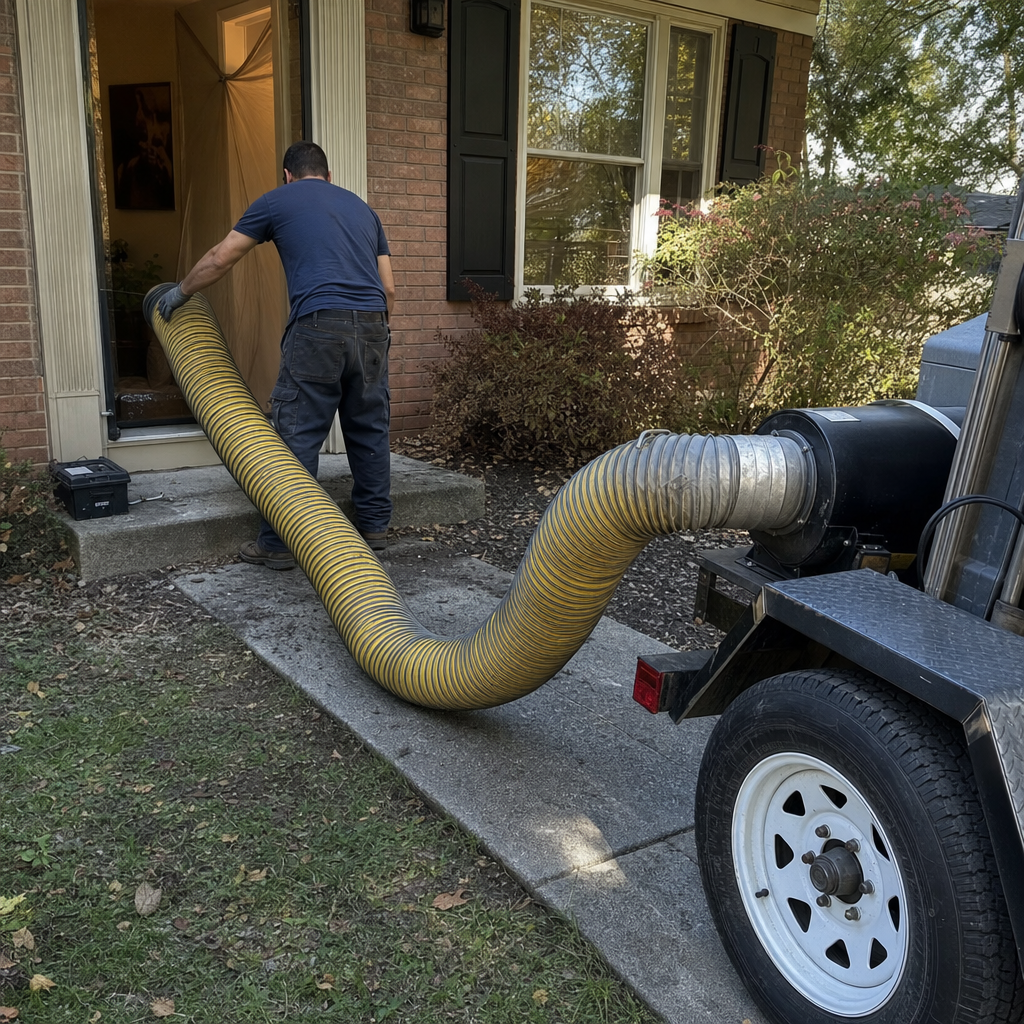
- DIY duct cleaning with consumer equipment. The Rotobrush and Nikro systems we deploy are professional-grade for a reason: they maintain negative pressure containment and reach the full duct run. Consumer vacuums with brush attachments disturb more material than they remove, and without containment, you release it into your living space.
When to Call a Professional
Some situations require immediate professional assessment rather than continued monitoring. Call for service when you notice persistent musty odors that correlate with HVAC operation, visible mold or discoloration at registers, significant dust accumulation returning within weeks of cleaning, or reduced airflow at specific supply vents suggesting blockage. After any home renovation — especially the historic property updates common in Cincinnati’s core neighborhoods — professional duct cleaning removes construction particulate that standard filtration won’t capture.
William Davis leads every job personally, bringing 14 years of field experience and professional-grade Rotobrush and Nikro systems to assess your complete duct system. Vanguard Air Duct & Vent Cleaning Greater Cincinnati home offers free estimates in Cincinnati — call (855) 916-8161 to schedule.
Frequently Asked Questions
Most complete residential duct cleaning services in the Cincinnati market range from $400 to $800 for a typical single-system home, with variation based on system size, accessibility, and whether duct sealing or sanitizing is included. Larger homes in areas like Indian Hill or Madeira with multiple zones may run higher. Call (855) 916-8161 for an exact quote — estimates are free and include a full system assessment.
Yes, for most Cincinnati homes. Fall cleaning removes stabilized summer accumulation before heating season, when your furnace will run the longest cycles of the year. Spring cleaning captures pollen that’s still actively entering the system, meaning you’re likely to need service again within months. The exception: homes with specific summer mold issues may need targeted cleaning regardless of season.
Every 2–3 years for homes with standard maintenance, annually for homes with pets, allergy sufferers, or in high-humidity zones near the Ohio River. Homes with recent renovation, previous water damage, or aging ductwork (pre-1990 common in Norwood, Clifton, and Price Hill) benefit from more frequent inspection.
Yes — Cincinnati’s extended pollen season and high humidity create conditions where allergens accumulate and recirculate rather than passing through. We’ve had customers in neighborhoods like Montgomery and Blue Ash report significant symptom reduction after cleaning, particularly when combined with upgraded filtration and duct sealing to prevent recontamination.
Duct cleaning addresses the distribution network — the supply and return ducts, registers, and plenums. HVAC cleaning includes the mechanical components: blower assembly, evaporator coil, and heat exchanger. For complete system health, both matter. We offer full-scope service including HVAC Cleaning in Norwood and throughout Cincinnati.
Signs that sealing is needed: humidity-related mold recurrence after cleaning, temperature inconsistency between rooms, visible gaps at duct connections, or energy bills that seem high for your usage. During our assessment, we inspect accessible ductwork and can recommend whether cleaning alone is sufficient or if sealing should be part of the scope.
The Bottom Line
Cincinnati’s four-season climate demands a proactive approach to duct maintenance. The homeowners who stay healthiest and spend least over time are those who: replace filters on a disciplined schedule, book professional cleaning in fall rather than spring, address humidity-driven mold risk with sealing before July, and coordinate duct service with HVAC tune-ups to eliminate duplicate trip charges. Reactive duct cleaning — the emergency call when something smells wrong or allergies spike — costs more and fixes less. Build the rhythm, protect your indoor air quality, and avoid the seasonal contamination cycles that Cincinnati’s river-valley geography makes inevitable.
Written by William Davis, Owner & Lead Technician at Vanguard Air Duct & Vent Cleaning Greater Cincinnati, serving Cincinnati since 2012.