
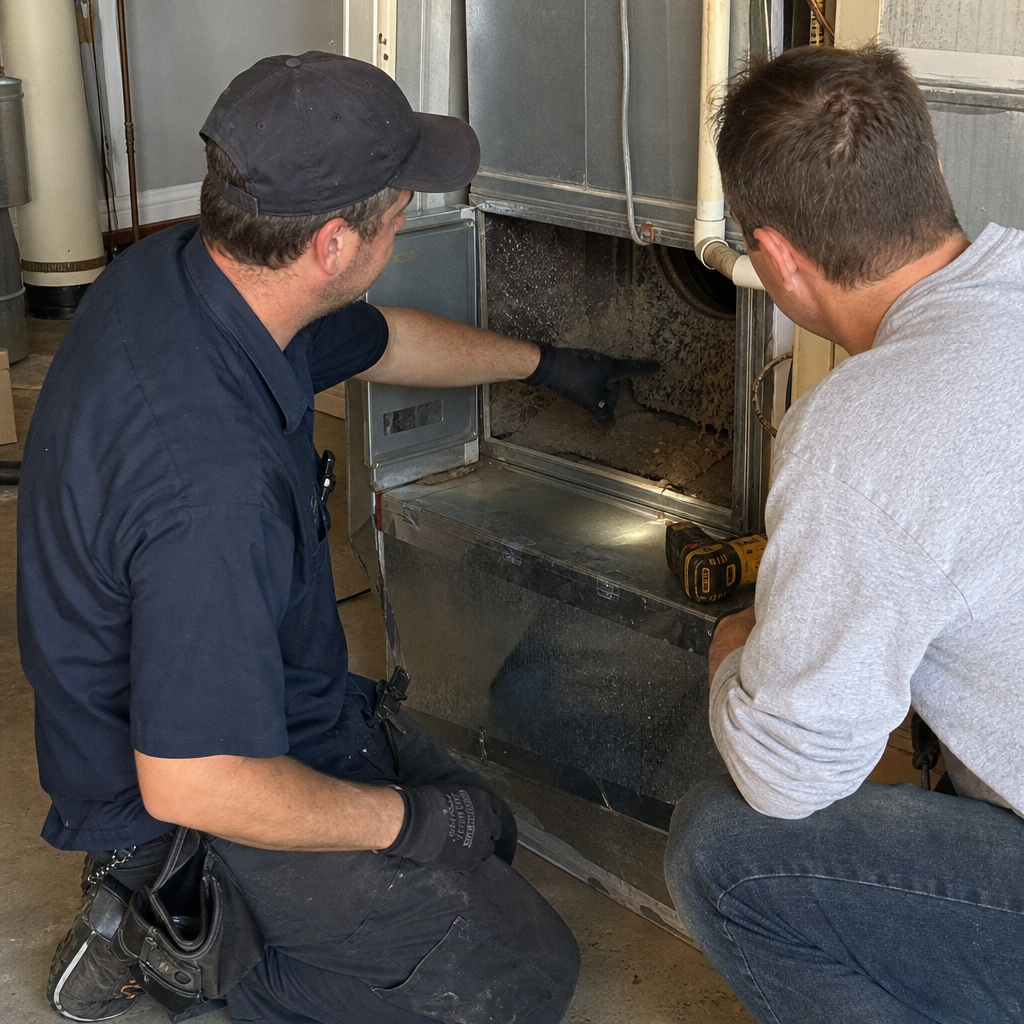
How Often Should Cincinnati Homeowners Clean Their Air Ducts?
Most homes need air duct cleaning every 3 to 5 years, but in Cincinnati, that interval shrinks to 2 to 4 years for older systems in unconditioned basements and can stretch to 5-plus years for newer, well-sealed ductwork in conditioned spaces. The difference comes down to humidity exposure, duct material, and whether your system was originally designed for forced air or retrofitted decades ago. If you’re unsure where your home falls, call (855) 916-8161 and we’ll walk you through it — no charge for an honest assessment.
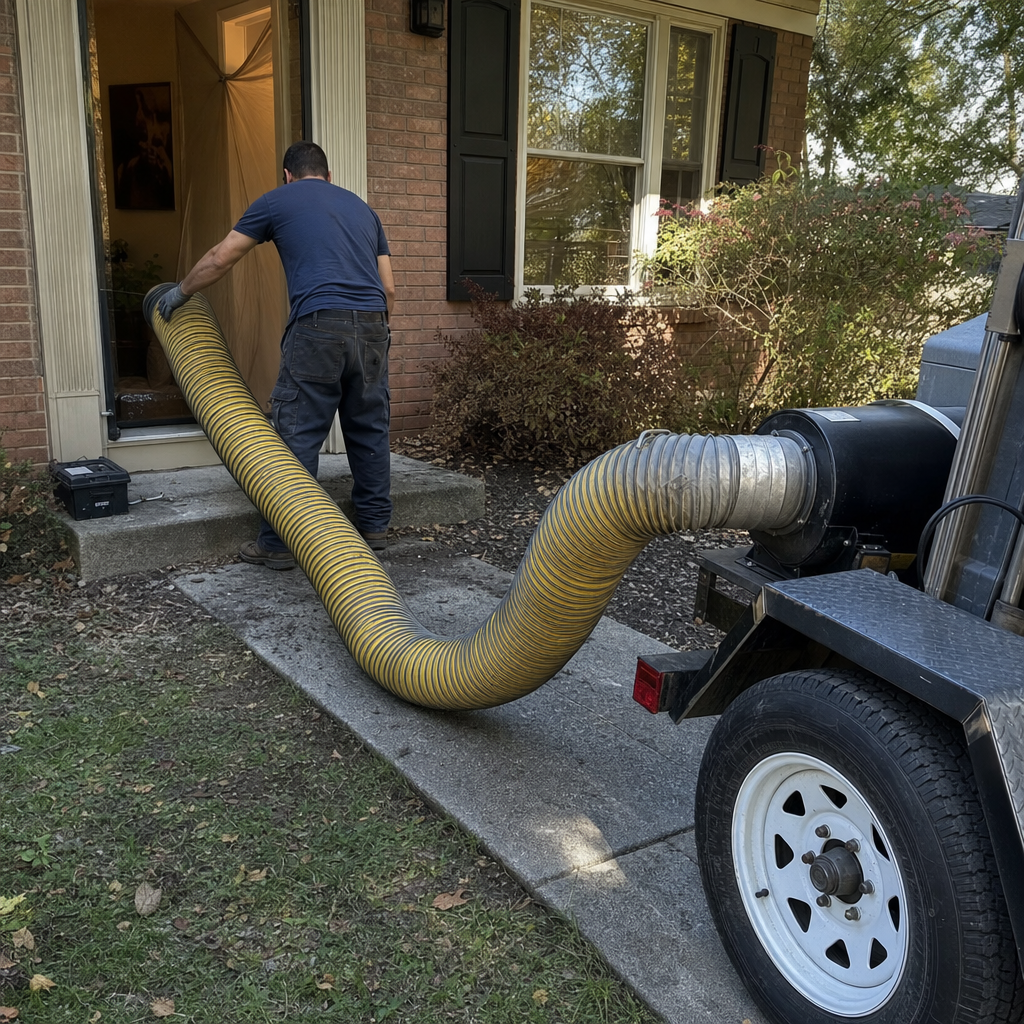
Why the Standard “3–5 Years” Advice Falls Short in Cincinnati
The 3-to-5-year guideline you’ll see on most HVAC websites assumes modern ductwork in a dry, climate-controlled environment. It doesn’t account for a 1920s Italianate in Price Hill with galvanized trunk lines running through a basement that hits 70% relative humidity every August, or a hillside-cut home in Mount Lookout where supply ducts against exterior walls sweat through the summer.
William Davis, Owner & Lead Technician at Vanguard Air Duct & Vent Cleaning Greater Cincinnati, has spent 14 years cleaning duct systems across the city, and the pattern is consistent: Cincinnati’s combination of old housing stock and river-valley humidity creates conditions that accelerate contamination faster than the national baseline.
Here’s what drives the real interval for your home:
- Duct material and age: Unlined galvanized steel from mid-century conversions traps debris and moisture; flexible ductwork from the 1990s sheds liner particles when overloaded.
- System location: Ducts in conditioned spaces stay drier and cleaner; ducts in unconditioned basements or crawlspaces accumulate moisture-driven growth.
- Household factors: Multiple pets, indoor smoking, recent renovations, or occupied allergy sufferers all compress the timeline.
- Ambient humidity: Cincinnati’s Ohio River Valley location traps moisture; basements here run consistently wetter than comparable homes in Columbus or Dayton.
We’ve cleaned systems in Norwood that looked fine at the registers but had compacted dust and active mold in the basement trunks — the homeowner had no idea because the visible supply vents were the only thing they’d ever checked.
The Cincinnati Housing Stock Problem: Retrofitted Systems in Damp Basements
Cincinnati carries one of the oldest urban housing inventories in the Midwest. Neighborhoods like Westwood, Clifton, and Norwood are packed with pre-WWII homes that originally ran on gravity warm-air “octopus” furnaces. When those systems were converted to forced air — often in the 1960s or 1970s — installers reused massive, unlined sheet-metal trunk lines and ran new branch ducts through plaster cavities and uninsulated chases.
Those trunk lines are still in service today, frequently decades without professional cleaning, sitting in basements blocks from the Ohio River where humidity pools. The valley effect is real: warm, moist air settles in the basin during summer months, and unconditioned basement spaces don’t get the dehumidification that living areas receive. The result is dust compaction accelerated by moisture, and in many cases, mold colonization that a simple register check will never reveal.
Our Rotobrush and Nikro systems are built for this — professional-grade equipment that can handle the labor-intensive access and thorough cleaning that Cincinnati’s older duct configurations demand. Consumer-grade tools from big-box stores can’t navigate the irregular runs and tight turns we encounter in these retrofitted systems.
Inspection-Driven Intervals vs. Calendar-Driven Ones
After we complete a cleaning, William Davis recommends your next interval based on what the inspection camera actually showed — not a date on a calendar. Here’s how that breaks down in practice:
| System Condition Found | Recommended Next Inspection/Cleaning |
|---|---|
| Moderate debris, no moisture history, sealed ductwork in conditioned space | 4–5 years |
| Heavy contamination, some moisture exposure, older galvanized trunk lines | 2–3 years |
| Active mold or water staining, unconditioned basement location | 1–2 years, with intermediate inspection |
| Post-renovation or post-water-intrusion cleanup | Re-inspect at 12 months |
The key distinction: a system that presents clean at the registers can still harbor significant problems in inaccessible trunk sections. In Columbia-Tusculum and Anderson Township hillside homes, we regularly find basement duct sections packed with mold while upstairs registers look spotless. The slab-level runs act as cold surfaces for humid river-valley air all summer, creating condensation that never reaches the living space — until the blower pushes spores through on the first heating-season startup.
Clean ducts aren’t glamorous — but neither is replacing a blower motor because it was choking on years of buildup.
Event-Based Triggers That Reset Your Interval Immediately
Certain events should override any calendar schedule and prompt immediate cleaning or inspection, regardless of when your ducts were last serviced:
- Any water intrusion near duct runs: Even minor basement flooding or plumbing leaks that contact ductwork can introduce mold-active moisture that spreads through the system.
- HVAC system replacement or significant modification: New equipment with higher airflow can dislodge accumulated debris; conversely, mismatched systems can create pressure imbalances that pull contaminants into living spaces.
- Whole-home renovation: Construction dust finds its way into ductwork even with registers covered; drywall compound and sawdust are particularly fine and pervasive.
- Confirmed mold elsewhere in the structure: If mold is present in basement walls or framing, the duct system is likely compromised as well — it operates as the home’s respiratory system.
We’ve responded to calls in Clifton where a homeowner finished a basement renovation, installed a new HVAC unit, and started experiencing respiratory symptoms within weeks. The new system was fine; it was simply moving through decades of accumulated debris that the old, weaker blower had never disturbed.
A Practical Self-Assessment for Cincinnati Homeowners
Between professional cleanings, three specific observations can tell you whether your system is due ahead of schedule:
Register dustiness relative to your last cleaning date. If you’re seeing heavy accumulation on supply registers within 18 months of a cleaning, something in your system is generating or trapping debris faster than normal — possibly deteriorating duct liner, open seams pulling attic or basement air, or a filtration issue.
Musty smell on first heating-season startup. That distinctive damp, earthy odor when you first run heat in October or November isn’t normal “settling dust.” It’s typically mold spores or bacterial growth in the ductwork being mobilized by heated airflow. In Cincinnati’s humidity profile, this is one of the most reliable early indicators.
Basement odor differential near trunk lines in August. Walk your basement during peak humidity season. If the air smells noticeably different — mustier, sharper, more organic — near where your main trunk lines run, you’re likely smelling active microbial growth in or on the ducts. The upstairs registers can read clean because the blower hasn’t yet concentrated and distributed that air.
Any two of these three signs means you should schedule an inspection. All three means you’re likely already past the point where cleaning provides preventive benefit and into corrective territory.
What Professional Duct Cleaning Actually Involves
When you hire Air Duct Cleaning through Vanguard, you’re getting William Davis on-site — not a subcontractor rotating through from another company. Our process starts with a camera inspection so you see what we’re seeing, followed by mechanical agitation with Rotobrush systems and negative-air collection through Nikro equipment. We clean the full supply and return network, including main trunks, branch lines, and boots — the areas most competitors skip or can’t reach.
For homes with active microbial concerns, we offer Air Quality & Sanitizing using Abatement Technologies protocols, applied after mechanical cleaning so you’re treating actual surfaces, not spraying chemicals over loose debris. And if our inspection finds failing seams, disconnected boots, or deteriorated duct liner, we can address Duct Repair & Sealing in the same visit — from cleaning to repair to sanitizing, one call completes the problem.
FAQs
Most Whole House Air Duct Cleaning Cost in Cincinnati, OH jobs fall between $400 and $700 for a typical 1,500–2,500 square foot home with a standard forced-air system. Older homes with complex retrofit ductwork, multiple HVAC zones, or heavy contamination requiring extended labor can run higher. Call (855) 916-8161 for a free, no-pressure estimate based on your specific system — we price by what we find, not by square footage alone.
DIY duct cleaning with consumer-grade tools typically costs $200–$400 in equipment rental or purchase, but reaches only the first few feet of accessible register runs and can damage flexible ductwork or dislodge connections you can’t see or reach. Professional Affordable Air Duct Cleaning in Cincinnati, OH with Rotobrush and Nikro systems accesses the full network, includes camera verification, and protects your HVAC warranty — for most Cincinnati homeowners, the difference in actual debris removed makes professional service the better value. Call (855) 916-8161 and we’ll explain exactly what your system configuration requires.
Dirty air ducts can contribute to respiratory irritation, allergy symptoms, and asthma triggers — particularly when mold, dust mite debris, or rodent droppings are present, which we find more commonly in Cincinnati’s humid basement environments than in drier climates. The ducts themselves are rarely the sole cause, but they operate as a distribution network for contaminants throughout your home. If someone in your household has unexplained symptoms that worsen when the HVAC runs, duct inspection is a logical diagnostic step — call (855) 916-8161 for an assessment.
Check the three leading indicators: register dust accumulation that’s heavy relative to your last cleaning date, a musty odor on first heating-season startup, and a noticeable smell differential near basement trunk lines during humid summer months. In Cincinnati’s hillside neighborhoods like Mount Lookout and Columbia-Tusculum, also watch for uneven cooling or heating — restricted basement trunk sections can starve upstairs zones. If any of these apply, call (855) 916-8161 for a camera inspection; estimates are free and we’ll tell you honestly whether Is Air Duct Cleaning Worth It? (Cincinnati, OH) for your situation or premature.
If you’d rather have it looked at, Vanguard Air Duct & Vent Cleaning Greater Cincinnati offers a no-pressure assessment in Cincinnati — call (855) 916-8161 for a free estimate. William Davis leads every job personally, bringing 14 years of field experience and over 1,000 verified reviews to your door.
Written by William Davis, Owner & Lead Technician at Vanguard Air Duct & Vent Cleaning Greater Cincinnati, serving Cincinnati, OH.